-
 play_arrow
MIX 56 CHESHIRE'S BEST MUSIC MIX

Sleep Better Tonight: Dr Jill’s Surprising Daytime Tip

Sleep Expert Reveals the One Daytime Habit That Can Transform Your Night’s Sleep
 Phil
Phil
PHIL ROBERTS
The Morning Show: 9th March 2026
Sleep. We’re obsessed with it, we’re not getting enough of it, and half of us are lying awake at 3.30am wondering if we locked the back door, fed the cat, or accidentally joined the wrong WhatsApp group for life.
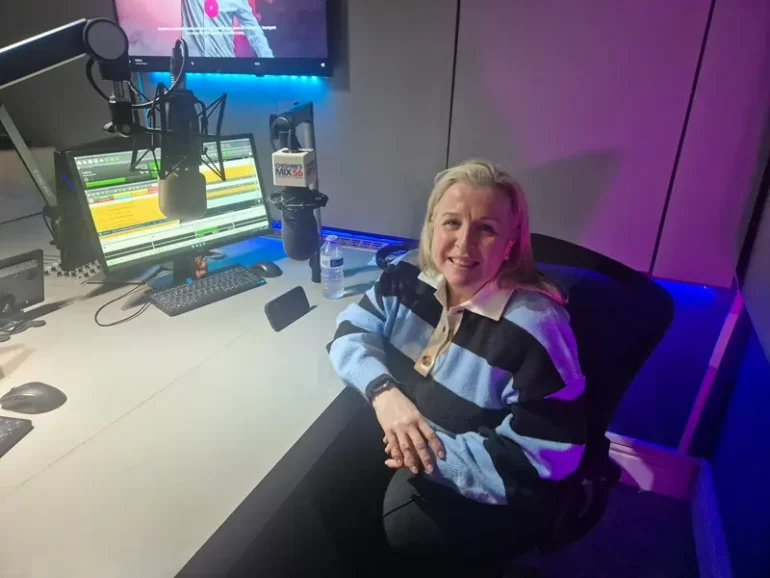
So for Sleep Awareness Month – and ahead of World Sleep Day on March 13, with the theme Sleep Well, Live Better – we invited someone who actually knows what they’re talking about into the MIX56 studio: clinical psychologist and sleep specialist Dr Jill McGarry from Sleep Better Doctor.
And yes, she does actually get people sleeping again.
Meet Dr Jil
On air I joked that Jill is dead important now with her posh title, but she quickly knocked that on the head. She’s a Doctor of Clinical Psychology – meaning years of training, exams every six months, and a brain full of knowledge about how our minds and bodies tick… just don’t ask her to fix a broken leg on a plane.
What she can help with is that awful middle‑of‑the‑night spiral so many of us know too well.
Why waking at 3.30am is actually normal
One of the first things Jill said absolutely floored me: it’s not the waking up in the night that’s the problem.
According to Jill, everyone wakes up once in the night – even those people who swear they sleep straight through. Our sleep runs in roughly 90‑minute cycles, and after two or three cycles, the brain naturally comes up for air.
Why? Evolution.
Way back when, we needed to check the “clan” was safe – no lions, tigers or bears creeping up on us. So a brief wake‑up in the middle of the night is wired into us as a safety check. The issue isn’t that moment of waking, it’s when we start thinking “Something’s wrong with me” and can’t get back off.
For some people, Jill said, just knowing that this wake‑up is normal – and that their sleep isn’t “broken” – is enough to dial down the anxiety.
Do our dreams reveal our secrets?
We had a brilliant listener question: “Does our sleep reflect our daytime secrets?”
Jill’s take: dreams are your brain’s way of sorting the day – and a bit of the deeper stuff underneath.
In the first half of the night, your body focuses on physical recovery. In the second half, it leans into emotional recovery. That’s when the brain “mushes together” the boss you saw, the news you listened to, the chat on the bus – and any themes you’re quietly working through.
So no, your dreams aren’t always some mystical secret code… but they can be a powerful way of processing what’s really going on.

The four pillars of better sleep
You’ve probably heard the usual tips: no phones in bed, no Netflix binge till 1am, no doom‑scrolling. Jill didn’t disagree – but she made it much simpler.
She talked about sleep hygiene (same idea as brushing your teeth every day) and boiled it down to four headings:
- Light
- Heat
- Routine
- Nutrution
And the big headline that surprised me? Sleep is much more about what you do in the day than what you do in the bedroom.
Light: Your easiest quick win
If you only take one thing away from Jill, make it this: get at least 20 minutes of natural daylight before noon.
That daylight goes in through the eyes and helps the brain make melatonin – the hormone that helps you get off to sleep later. If we sit indoors all day under artificial light, our internal clock can drift and we start running on a 25‑hour day, which is not ideal when the alarm goes at 6am.
And no, sitting in the conservatory doesn’t count. Glass blocks a lot of the good stuff. Jill’s advice was simple:
- Get outside for 20 minutes in the morning if you can
- A gentle walk is ideal, but even a brew on a bench works
- In the UK, she says we should take off the sunglasses unless the sun is really blazing
I’d genuinely never heard anyone say that before.
Heat, Coffee & the evening wind-down
Heat, Jill said, is more important in the morning than at night. Warming the house (or at least the bedroom) to help you wake up is often more useful than blasting the heating all evening and then feeling groggy.
On caffeine, she wasn’t anti‑coffee at all – it’s more about when you have it and how sensitive you are. For some, a coffee after 11am wrecks their night. Others – like Jill – can drink it at 8pm and be fine. I confessed on air that swapping late‑night Pepsi Max for the caffeine‑free version has made a noticeable difference to my sleep.
Alcohol? It may knock you out, but it flattens your sleep cycles and has you up to the loo, so it’s not your friend in the long run.
Can a bad sleeper become a good sleeper?
A big hopeful yes from Jill.
She sees people all the time who describe themselves as “terrible sleepers” and, with some changes, notice a massive improvement. Some of us will always have to work a bit harder at sleep – just like some people find losing weight easier than others – but there is always room to get better.
For Jill, the real sign of a good night isn’t what happens at 2am – it’s how you feel the next day: rested, ready, like someone’s wrapped you in a cosy blanket and pressed reset.
We had so many questions during the show that we’ve already booked Jill to come back in April. In the meantime, if you’re struggling with sleep, have a listen to the full chat and maybe try that 20‑minute morning daylight experiment for yourself.
Listen Again: Dr Jill with Phil in the Morning
-
 play_arrow
Sleep Better Tonight: Dr Jill’s Surprising Daytime Tip The Sleep Better Doctor