BEST OF THE GUESTS

Fear of flying? Captain Rod’s advice on Good Morning Cheshire
today03 August 2026

Background
share close

Fear of flying?
Captain Rod Halloran’s advice on Good Morning Cheshire
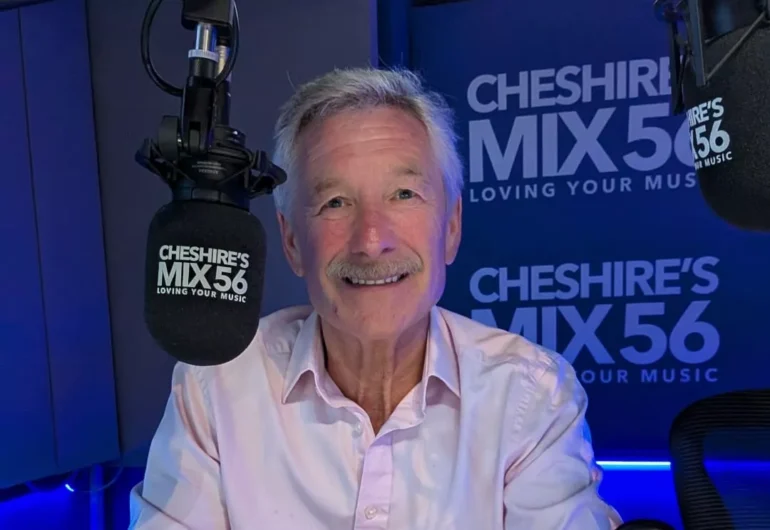
captain rod halloran BA 747 pilot fear of flying on MIX56
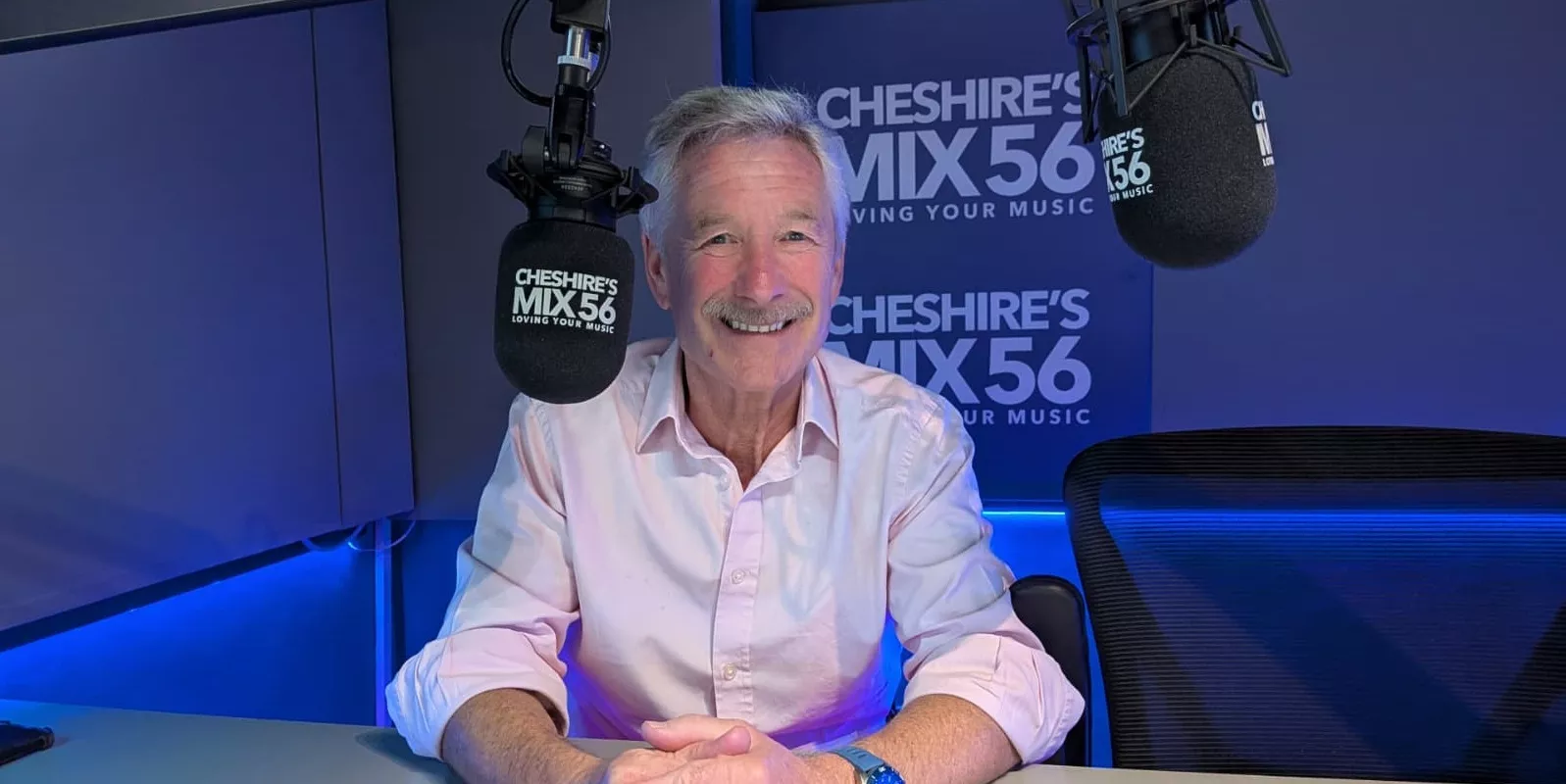
Captain Rod Halloran joins Smithy & Ian on MIX56

Phil

SMITHY & IAN
GOOD MORNING CHESHIRE

There are certain guests where, wherever I am, whatever I’m doing, I stop and turn the radio up. Captain Rod Halloran is one of them.

Rod is a proper MIX56 regular — 40 years in the air, retired now, and still one of the most calming voices you’ll hear on a Cheshire morning. And every single time Smithy gets him in, I end up learning something.

This morning’s chat was no exception, and given it’s the time of year when half of the M56 corridor is heading for the airport, it felt like one worth writing down.

Forty years, four aircraft types and one Queen of the Skies

Rod started out as a captain at Manchester on the Boeing 737, moved on to the 757 and 767, went down to Heathrow for the 777, and finished his career on the 747 — the jumbo. He flew it for 16 years, and it’s clearly the one that stuck.

The Queen of the Skies, as Smithy called it, and Rod didn’t argue. British Airways retired its last 747s in 2020, and if you ever stood at the Runway Visitor Park and watched one come over the fence, you’ll know exactly why people still get misty about it. The A380 is bigger. It just isn’t the same shape.

Flying is very much the family business, too. Rod’s son is a captain with British Airways, one of his daughters is a captain with TUI, and his eldest, Alicia, used to be cabin crew with Virgin. As Smithy put it — is there anyone in that family with their feet on the ground?

Why one in four of us dread it

Smithy raised the stat that around one in four of us are fearful of flying, and it stands up. British Airways puts the figure at roughly a quarter of people having at least some anxiety about it, with around one in ten having a genuine phobia.

Rod reckons it comes down to two things. First, you’re not in control — though as he pointed out, you’re not in control on a train or in the back of a car either. And second, you simply don’t know what’s going on. All those knocks, whirs and clunks mean something to a pilot and nothing at all to the rest of us.

The bits that should reassure you

A few things from Rod that I’d genuinely never thought about:

The walkaround is real. Before every flight, one of the pilots inspects the aircraft — tyres for cuts or underinflation, the airframe for dents, any sign of a fuel, oil or hydraulic leak, and evidence of a bird strike. The engineers do their own inspection separately. It’s checked at least twice, every time. Rather more than most of us manage with the car on a Monday morning.

Turbulence is a bumpy road, not a danger. Rod’s analogy: it’s exactly like choppy water, you just can’t see the waves. His local version was even better — it’s the Bowdon lights into Altrincham with all the potholes. Your drink might go over. The aeroplane will be fine.

Four engine failures in 40 years, and nobody noticed. Coming back across the Atlantic at night on the 747, Rod’s crew got a low oil pressure warning and shut an engine down — exactly what you’d do in a car to avoid wrecking it.

They still had three, didn’t change track, didn’t change altitude, and carried on to Heathrow. The fire service and air traffic control knew. The passengers slept through it. As Rod said, there’s no point waking people up at 3am to tell them something they can’t do anything about.

The Kids Live @5 questions (which were, obviously, the best ones)

Smithy had gathered questions from our Kids Live @5 team, and they were streets ahead of anything the grown-ups would have asked.

Oscar, who loves space, wanted to know whether Captain Rod had ever accidentally flown into space and then turned around. Short answer: no. Though Rod admitted there were some days coming home when it felt like it.

It did lead somewhere useful, mind. Rod explained that a long-haul aircraft is too heavy to climb high at the start — 34,000 or 35,000 feet is about your lot. On the 747 they could burn off around 150 tonnes of fuel over a flight, and as the aircraft gets lighter it can climb higher, where it’s more efficient.

Another of the kids team asked whether pilots do anything at all, or just press the autopilot button. There’s no auto take-off, Rod said, but there is auto-land, and in poor visibility they were required to use it. The pilots monitor everything and can take over right down to the final seconds.

Has he flown anyone famous? the kids were keen to ask this one. Some royalty, plenty of sportspeople, and no shortage of musicians and actors on the Los Angeles and New York runs. The one that got the reaction in the studio, though, was Paul McCartney — who Rod says was absolutely gracious.

The story that stayed with me

Fifteen minutes before a Heathrow–Toronto departure, the dispatcher told Rod there was a lady on the stand who was shaking and in tears, and might not board at all. They’d already pulled her bag to one side so the flight wouldn’t be delayed.

Rod handed over to his first officer and went to find her. He talked to her. He told her about his own phobia — needles, which he can’t so much as watch. He told her that if she wanted to come, he’d be delighted, and if she didn’t, he completely understood.

She came. Two months later, back in Toronto, the station staff handed him a letter. She’d written to say thank you, and that she’d carry on flying.

“That’s success to me,” he said. It’s the best thing I’ve heard on this station in months.

If flying genuinely stops you

Both British Airways and easyJet run courses, and they work. BA’s Flying with Confidence is a one-day course combining a pilot session, a clinical psychologist and a short flight at the end. EasyJet’s Fearless Flyer starts from £89, has helped over 15,000 people since 2012, and — handily for us — runs experience flights out of Manchester.

And Rod’s final word

Two small things, both free. Watch the safety briefing, even if you’ve flown a hundred times, and find your nearest exit — and the one after that, in case the first is blocked. Rod still does it every single flight.

Also stay in your seat until the brakes are on at the stand. There’s a lot going on between leaving the runway and reaching the gate, and a bottle of duty-free coming out of an overhead locker doesn’t care whose head it lands on.

His actual top tip for anyone anxious? Understand how much training pilots do. They’re serious about it, and they want to get home to Manchester without incident just as much as you do.

Smithy played us out with Sinatra and Come Fly With Me. What else could he have played?

Good Morning Cheshire with Smithy and Ian, weekday mornings on Cheshire’s Mix 56.

Listen Again
  • cover play_arrow

    Fear of flying? Captain Rod’s advice on Good Morning Cheshire Phil Roberts
Written by: Phil Roberts