-
 play_arrow
MIX 56 CHESHIRE'S BEST MUSIC MIX

Spire and myGP Clinic bring prostate health advice to Stretton

“Don’t let fear put you off getting checked”: Spire and myGP Clinic host prostate health evening
Local health experts came together at The Park Royal Hotel in Stretton for a free men’s health evening focused on prostate health, early detection and the reassuring advances now available in diagnosis and treatment.
The event was hosted by Spire Cheshire Hospital, Spire Manchester Hospital and myGP Clinic, giving attendees the opportunity to hear directly from specialists, ask questions and learn more about a topic that can often be overlooked or delayed through embarrassment or uncertainty.
The evening covered common prostate conditions, symptoms to be aware of, screening and early detection, and when to seek medical advice.
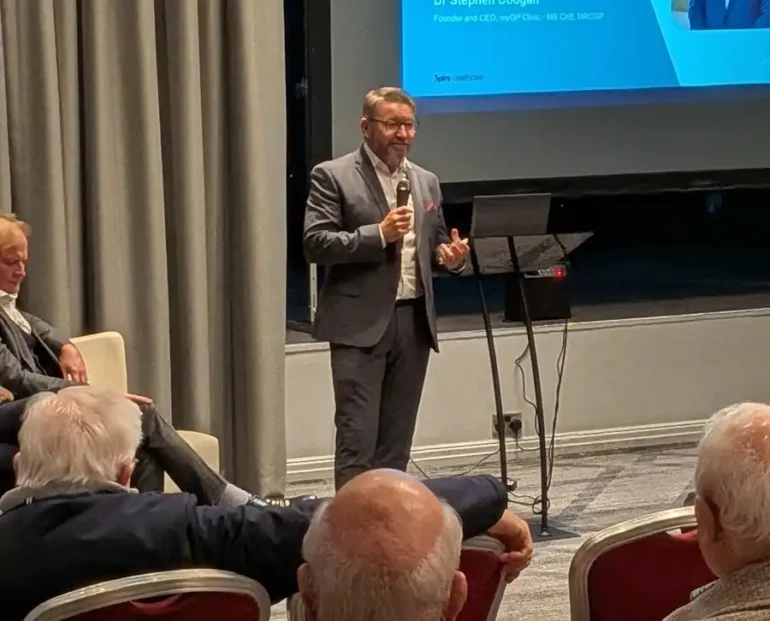
The evening opened with a presentation from Dr Stephen Coogan of myGP Clinic, a private GP service offering same-day appointments at its four Cheshire clinics.
Dr Coogan explained the benefits of the membership-based service, which includes annual health screening, longer appointments and free inclusion for children under 18 with an adult membership.
Dr Stephen Coogan talks about myGP Clinic
-
 play_arrow
myGP Clinic Ian
Mr Paul Jamieson, consultant urologist, then gave an informative presentation on benign prostate conditions, understanding and interpreting PSA tests, and the range of treatments available.
He explained that prostate symptoms do not automatically mean cancer, and that many men experience urinary changes because of non-cancerous conditions such as an enlarged prostate.
Mr Jamieson highlighted changes that can be worth discussing with a GP, including a weaker or interrupted urine flow, needing to urinate urgently or more often, feeling as though the bladder has not fully emptied, and waking frequently during the night.
He stressed that these symptoms are common and can have several causes, but should still be assessed rather than ignored.
He also emphasised the importance of taking certain symptoms seriously. Blood in the urine, or new urinary incontinence in an adult, are red flags that should be investigated promptly.
Mr Paul Jamieson on Benign prostate issues and treatment
-
play_arrow
Benign Prostate Issues Ian
Consultant urological surgeon Mr Sotonye Tolofari followed with a positive and reassuring overview of prostate cancer, explaining how it is diagnosed and treated today.
His central message was one of hope: outcomes can be very good, particularly when cancer is identified early, and modern medicine now offers a range of effective treatment options tailored to the individual.
Mr Tolofari explained that prostate cancer is the most common cancer in men in the UK. Around one in eight men will be diagnosed during their lifetime, while the risk is higher for Black men—about one in four—and for those with a family history of the disease.
Mr Sotonye Tolofari on Prostate Cancer
-
play_arrow
Prostate Health Ian
A key theme of the evening was that prostate problems do not always cause obvious symptoms, particularly in the early stages. This makes awareness, risk assessment and timely discussion with a healthcare professional especially important.
The speakers also addressed the PSA blood test. While it can be a useful starting point, it is not a definitive cancer test: results can sometimes be raised for reasons other than cancer, while in some cases cancer may be present despite a PSA result within the expected range.
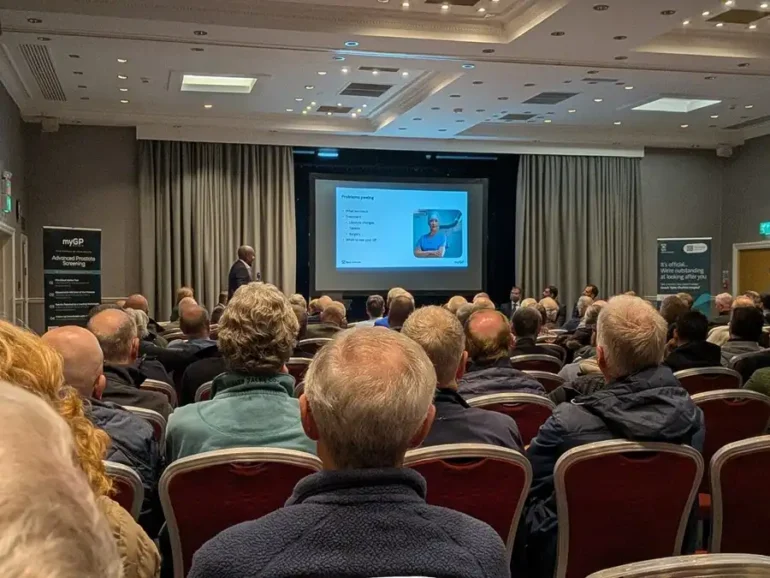
The NHS notes that a PSA test can indicate a problem with the prostate, but cannot on its own confirm prostate cancer.
Attendees heard that modern diagnosis increasingly uses MRI scanning, which can provide a more detailed picture and help guide further assessment.
The speakers reassured men who may be anxious about a digital rectal examination that, although it is still sometimes used, it is not the preferred or only route to assessment today—and should not be a barrier to seeking help.
The evening’s overarching message was positive: know your personal risk factors, listen to your body, maintain a healthy lifestyle, and do not delay seeking advice if something does not feel right.
For men aged over 50—or those with a higher risk because of family history or ethnicity—a conversation about PSA testing can be an important first step.
The free event was described by attendees as informative, approachable and reassuring, and forms part of a wider programme of health events offered by Spire.
With expert advice, practical information and a clear message that early conversations can make a real difference, the evening helped remove some of the uncertainty surrounding prostate health.
For anyone with concerns about urinary symptoms, prostate health or family history of cancer, the advice from the experts was simple: don’t wait, don’t worry alone, and speak to a healthcare professional.