

chevron_left
-
 play_arrow
MIX 56 CHESHIRE'S BEST MUSIC MIX
play_arrow
Miss Seema Prasad talks about foot & ankle surgery

-
 play_arrow
Miss Seema Prasad talks about foot & ankle surgery Spire Cheshire Hospital
“My only regret is I didn’t do it sooner”
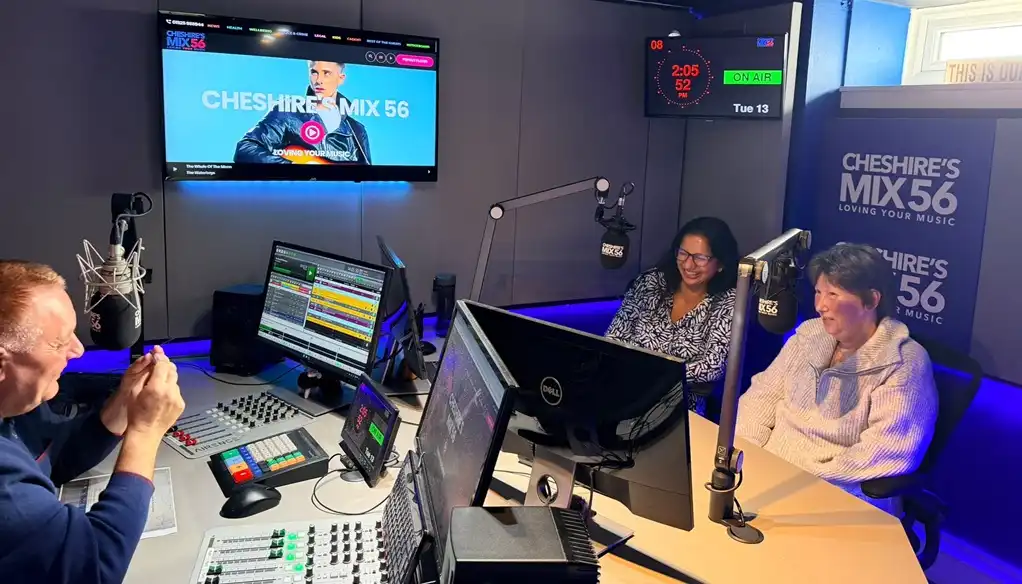
Getting up from a chair. Walking across a room. Finding a comfortable position in bed. They’re everyday things we don’t tend to think much about — until pain starts getting in the way.
For Rosalyn, ankle pain had reached the point where she had to brace herself every time she stood up.
She joined Ian James on Cheshire’s Mix 56 alongside Miss Seema Prasad, consultant foot and ankle surgeon at Spire Cheshire Hospital, for our Meet the Consultant series. Together, they talked about getting help, finding the right treatment and what recovery really looks like.
“Okay, it’s going to hurt — but let’s do it”
Rosalyn first noticed something wasn’t right towards the end of 2023. Initially, she thought she might have pulled a tendon. But instead of settling down, the pain gradually got worse.
By the following year, it was there all the time — whether she was walking, sitting or trying to sleep. Her foot had also started turning inwards, so she was walking more on its side than flat on the ground.
“Every time I had to move somewhere, walk somewhere, it was just sort of like, ‘Okay, it’s gonna hurt, but let’s do it,’” she told Ian.
After speaking to her GP and being told she faced a lengthy wait, Rosalyn decided to look into private treatment.
She described getting an appointment with Miss Prasad the following week, having an MRI scan that same day and returning a week later to talk through her options. That was her own experience, rather than a guaranteed timetable for everyone, but she said the speed of the process made a real difference to her.
First, find out what’s causing the pain
So, what was happening with Rosalyn’s ankle?
Miss Prasad explained that Rosalyn had previously ruptured a tendon and had it repaired elsewhere. That tendon had subsequently stopped working, contributing to a fixed change in the position of her ankle.
It’s why getting a proper diagnosis matters, rather than simply trying to carry on with “a bad ankle”.
“It’s really important to establish a diagnosis,” Miss Prasad told Ian. Once you know what’s causing the problem, you can start looking at the right treatment.
A consultant orthopaedic and trauma surgeon specialising in foot and ankle surgery, Miss Prasad treats conditions including tendon problems, arthritis, bunions and sports injuries.
Seeing a specialist doesn’t mean you’ll need an operation
If you’ve been putting off getting help because you’re worried about surgery, there was a reassuring message from the conversation: an operation isn’t automatically the next step.
Miss Prasad explained that treatment can include physiotherapy, rehabilitation or, where appropriate, injections. It depends on the diagnosis and how much the problem is affecting your life.
Perhaps you can’t manage your usual walk, enjoy a round of golf or get back on the netball court. If pain is becoming a regular feature of your day, she encouraged listeners to get advice rather than simply put it down to getting older.
That applies to sports injuries, too. An ankle that keeps getting injured isn’t something to keep brushing off. Miss Prasad explained that repeated ligament injuries can leave the ankle unstable and lead to further damage. The right rehabilitation can help strengthen it and reduce the risk of the same thing happening again.
Recovery wasn’t easy — but it was worth it for Rosalyn
After discussing her options, Rosalyn chose surgery.
She was open about the fact that recovery came with challenges. Initially, she couldn’t put any weight on her operated ankle, and getting around with a walking frame was exhausting. For several weeks, she used a wheelchair.
But once the plaster came off and she could start putting weight through her foot again, things began to change.
“Once I’d got over that post-op surgery pain, it was brilliant,” she said.
Miss Prasad explained that there isn’t one recovery timetable for every ankle operation. Some keyhole procedures allow movement quite quickly, while a tendon reconstruction needs time protected from weight-bearing so the repair can heal.
For Rosalind, that meant six weeks in plaster before moving on to walking and rehabilitation.
“My life has changed”
Asked what she would say to someone in a similar position, Rosalyn’s answer was straightforward.
“My only regret is I didn’t do it sooner,” she told Ian. “My life has changed.”
Her story was an honest account of living with pain, making a decision about treatment and working through recovery — with an outcome she described as “life-changing”.
Miss Prasad’s final message was not to ignore symptoms that persist. And after an injury, if an ankle is swollen and you can’t put weight on it, she stressed the importance of prompt hospital assessment rather than assuming it’s just another sporting knock.
You can find out more about Miss Seema Prasad and her foot and ankle practice on the Spire Healthcare website.
This article is based on an interview with Ian James on Cheshire’s Mix 56. It provides general information, not individual medical advice. Treatment and recovery will depend on your condition and circumstances.